Stop settling for search engines that treat your private data like a commodity. If you want the best private search engines, the choice comes down to your actual threat model, not marketing hype.
I test and evaluate privacy tools daily, and finding a practical alternative to Google requires verifying which products actually work. The privacy paradox is real: 44% of U.S. adults use non-tracking browsers or search engines, yet 56% still blindly accept privacy policies without reading them (Pew Research). It is time to break that cycle.
Choose a safer default based on indexing technology, business models, and AI privacy boundaries.
Quick Picks:
- Best overall: Brave Search
- Best free independent option: Mojeek
- Best for maximum control: SearXNG
Short on time? Use my quick picks above, or jump straight to the comparison table below.
What is the best private search engine for most people?
For most people, Brave Search and the DuckDuckGo search engine are the top two choices. Brave offers stronger independence from Big Tech infrastructure. DuckDuckGo provides the easiest, most familiar transition for everyday users. Startpage remains an excellent third option for users wanting Google-style results without tracking.
Use my quick picks to find your category, then jump to the deeper analysis:
- Brave Search: Best free independent. You want real infrastructure separation from Google and Bing.
- DuckDuckGo: Best easiest switch. You want low-friction privacy with a familiar interface.
- Startpage: Best Google-style results without Google. You want mainstream results via a privacy proxy.
- Kagi: Best paid. You want high-quality results, zero ads, and aligned subscription incentives.
- SearXNG: Best self-hosted/control-first. You want open-source transparency and total technical control.
Already know your use case? Jump straight to the section that matches it.
Compare the best private search engines in one table
Compare them on four core variables: where results originate, how the company generates revenue, how AI features handle your queries, and corporate jurisdiction. These factors reveal actual privacy practices beyond generic marketing claims. Use these criteria to filter down to a search engine that fits your specific threat model.
| Search engine | Result source / index type | Business model | Jurisdiction | Open source | AI features | Proxy / Tor support | Browser / app support | Cost | Best for | Honest caveat |
|---|---|---|---|---|---|---|---|---|---|---|
| Brave Search (privacy notice) | Own index | Ad-funded / Premium | US | No (Search) | Yes (In-house) | Yes (Tor via browser) | Web, App, Browser | Free / Paid | Independence | Strongest free option, but carries brand baggage. |
| DuckDuckGo (search privacy) | Metasearch / Proxy | Ad-funded | US | Partial | Yes (Duck.ai) | Yes (Tor onion) | Web, App, Browser | Free | Easy switch | Partners with Microsoft for ads and some results. |
| Startpage (privacy policy) | Metasearch (Google) | Ad-funded | Netherlands | No | No | Yes (Anonymous View) | Web, Extension | Free | Familiarity | Owned by ad-tech company System1. |
| Kagi (privacy protection) | Own index / Metasearch | Subscription-funded | US | No | Yes | No direct Tor | Web, Extension | Paid | Power users | Overkill if you rarely search. |
| SearXNG (about SearXNG) | Metasearch | Open source / Free | Varies (Instances) | Yes | No | Yes | Web | Free | Self-hosters | Public instances require trusting the host. |
| Mojeek (privacy policy) | Own index | Ad-funded | UK | No | No | No | Web, App | Free | Purists | Local intent queries require patience. |
| Qwant (overview) | Metasearch / Own index | Ad-funded | France | No | Yes | No | Web, App | Free | EU users | AI integration adds data-processing complexity. |
| MetaGer (about MetaGer) | Metasearch | Nonprofit | Germany | Yes | No | Yes (Tor onion) | Web, Extension | Free / Paid | Nonprofits | Less mainstream polish. |
| Swisscows (data privacy) | Metasearch (Bing) | Ad-funded / Subscription | Switzerland | No | No | No | Web, App | Free / Paid | Families | Free version is no longer the fully anonymous tier. |
| Ecosia (search result providers) | Metasearch (Bing/Google) | Ad-funded / Nonprofit | Germany | No | Yes | No | Web, App, Browser | Free | Eco-conscious | Privacy-improved, but not privacy-maximal. |
Note: Every row links to the engine's official privacy/help page for verification.
Private from whom? The framework that actually helps you choose
- Privacy is a chain of trust, not a binary badge.
- Independent index engines remove Google/Bing from the chain entirely.
- Proxy engines simply hide your identity from Google/Bing.
- How a search engine generates revenue dictates its long-term privacy incentives.
What makes a search engine private?
A private search engine actively avoids search profiling, storing search history, building targeted ad profiles, and utilizing third-party trackers. Methods differ by provider. Proxy engines anonymize queries before routing them to larger providers, while independent engines rely on their own web index and infrastructure.
The 3 types of private search
- Proxy / privacy-wrapper engines: They hide your identity, but still rely on larger providers' infrastructure (Startpage, DuckDuckGo, Qwant, Swisscows).
- Independent-index engines: They eliminate dependence on Google or Bing by crawling the web themselves (Brave Search, Mojeek).
- Control-first / metasearch / self-hosted options: They maximize technical control but require manual setup or trusting a public instance host (SearXNG, MetaGer).
Own index vs proxy: Why this matters
An independent index engine operates its own search stack. A proxy or metasearch engine adds a privacy layer between you and a larger provider's backend.
An independent-index engine relies on its own web crawler and ranking algorithms to generate results. A proxy-style engine functions as a privacy shield, anonymizing your search before passing it to Google or Bing. One removes reliance on Big Tech; the other simply hides your identity from them.
Query Path: Brave / Mojeek
You > Engine > Engine's Own Index > Results
Query Path: Startpage / DuckDuckGo
You > Engine > Anonymization Layer > Google/Bing Index > Results
Follow the money: The ultimate trust signal
A company's business model dictates its long-term data incentives. Subscription-funded services generate revenue by satisfying users. Ad-funded search engines face constant structural pressure to balance user privacy against advertiser demands. Examining how a search engine makes money reveals its true data priorities.
Evaluate incentives cleanly:
- Ad-funded (DuckDuckGo, Brave, Startpage): Free to use, but structural tension exists between user privacy and advertiser performance.
- Subscription-funded (Kagi): You pay directly. Incentives align perfectly with user privacy.
- Nonprofit (MetaGer): Funded by donations or memberships. High structural trust, but lower development budgets.
Jurisdiction matters, but data minimization matters more
An engine in the US that collects zero data is inherently safer than a Swiss engine that logs everything. When data policies are equal, EU/GDPR or Swiss jurisdictions offer stricter regulatory backstops against government overreach.
Stop treating search engines and browsers as the same product
Changing your search provider is not the same as swapping your browser. DuckDuckGo and Brave both offer browsers and search engines. You can use the Brave search engine inside Firefox, or the DuckDuckGo search engine inside Chrome. Separate these tools in your mind to build a stronger privacy stack later.
Best private search engines for everyday users leaving Google
- Choose these for the most familiar, mainstream experience.
- They serve as the best default for daily use.
- They require the least learning curve for non-technical users.
DuckDuckGo search engine
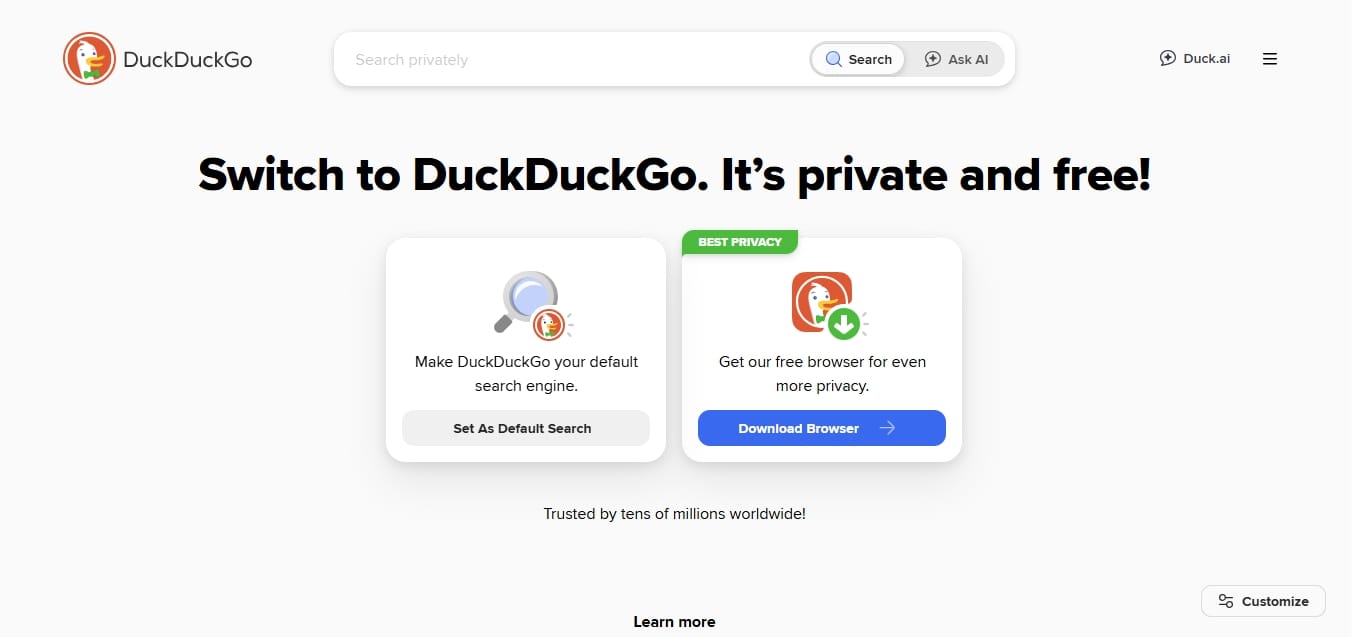
Quick verdict: The best mainstream privacy upgrade for most people. The clean UI and strong brand recognition make it an easy sell for everyday searchers.
Yes, with clearly defined limits. DuckDuckGo does not track your individual searches. However, its search product relies on outside partners, including Microsoft, for ads and specific result syndication. Treat it as a highly practical privacy upgrade rather than a fully independent web index.
What you gain: A frictionless switch, a clean interface, and useful quick-answer features. Optional AI tooling integrates safely under a trusted brand.
What you give up: Full infrastructure independence. Ad and business-partner nuances mean it functions primarily as an anonymization layer for Bing, not a standalone web index.
Honest caveat: It is a fantastic default for casual users, but not the most structurally independent option. Distinguish between the DuckDuckGo search engine, their private browser, and Duck.ai.
Startpage
Quick verdict: Best for users demanding Google-quality results with extra privacy layers.
What you gain: Startpage delivers a mainstream feel by pulling results directly from Google while stripping your identifying metadata. Its Anonymous View feature lets you open destination links without exposing your IP address to the target website.
What you give up: Proxy-based privacy is not true independence. Startpage is also partially owned by ad-tech company System1, raising valid ownership questions for strict privacy advocates.
Honest caveat: The proxy protection works well, but you remain tethered to Google's search index and an ad-tech parent company.
Qwant
Quick verdict: Best for EU users prioritizing GDPR compliance and a neutral interface.
What you gain: French/GDPR-rooted positioning. Qwant delivers strong privacy-first branding and avoids targeted advertising by default.
What you give up: Under the hood, Qwant relies on metasearch architecture. Its newer AI integrations introduce complex data-processing nuances.
Honest caveat: Private by positioning, but less frictionless than DuckDuckGo for users outside Europe.
Best private search engines for maximum independence
- Brave is the easiest independent pick.
- Mojeek is the purist pick.
- Result quality trade-offs are real when leaving the Google/Bing index.
If you want less Google and Bing in the chain entirely, start here.
Brave search engine
Quick verdict: The best free independent private search engine available. Brave Search offers stronger structural independence because it relies on its own index rather than syndicating results from Bing or Google. DuckDuckGo provides a simpler transition, but Brave completely removes Big Tech infrastructure from your daily search habits.
What you gain: Explicit independence. Brave utilizes its own index, slashing reliance on Big Tech. You get robust search results and in-house AI integration built under one roof. For those looking for a Brave search engine private browsing experience, switching your default is a one-click process.
What you give up: Brave's brand baggage, stemming from its crypto-integrated browser history, deters some purists. Integrating AI directly into search results also expands the product's risk surface area.
Honest caveat: The strongest free independent option. Brave Search includes an optional Google fallback toggle for niche local queries, but you must manually activate it.
Mojeek
Quick verdict: Best for privacy purists seeking a true alternative, not a reskinned syndication layer.
What you gain: Mojeek relies entirely on its own crawler and ranking algorithm. It maintains a strict no-tracking posture and an objective, non-personalized result philosophy.
What you give up: The smaller index struggles with hyper-local intent or highly specific shopping queries, requiring more patience from the user.
Honest caveat: The most principled independence pick, but it lacks the polish required for a frictionless daily driver.
Best private search engines for power users, researchers, and paid-first searchers
- SearXNG provides maximum technical control.
- Kagi aligns incentives via paid subscription and high-quality results.
- MetaGer leverages a nonprofit structure for systemic trust.
SearXNG
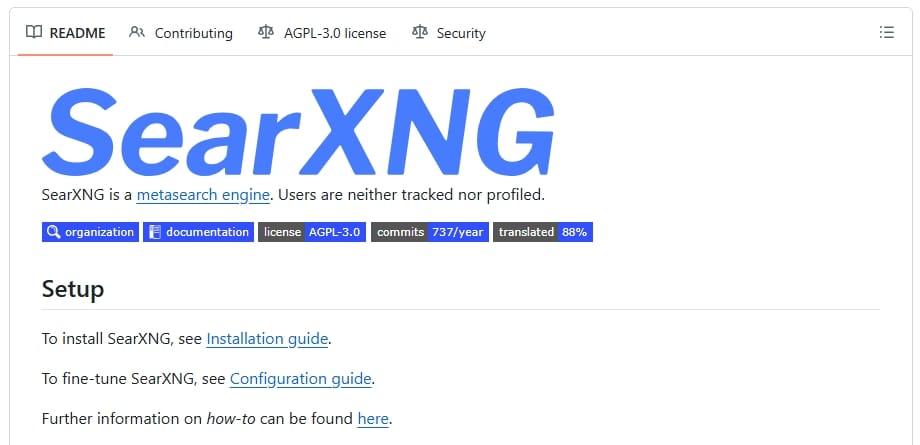
Quick verdict: Best for self-hosters and technical users. Yes, SearXNG is the active project. SearXNG launched as a fork of SearX in 2021 and remains actively maintained. The original SearX GitHub repository is archived and explicitly states it is no longer supported.
What you gain: Total control. SearXNG acts as a metasearch aggregator, pulling from dozens of engines without passing your metadata. It supports self-hosting, public instances, and Tor routing. When researching the private search engines, Reddit communities heavily favor SearXNG for this exact level of control.
What you give up: Using public instances requires trusting the specific host administrator. Self-hosting demands technical expertise beyond the average user.
Honest caveat: Unmatched technical control, but an awful fit for anyone wanting a zero-maintenance default.
Kagi
Quick verdict: The undisputed best paid private search engine.
If you search heavily and value aligned incentives, yes. Kagi relies on subscriptions instead of ads. They do not tie searches to accounts, they offer robust customization, and they ruthlessly suppress SEO spam. The trade-off is the monthly cost.
What you gain: Pure incentive alignment. You pay a subscription, making you the customer rather than the product. Kagi delivers a strictly ad-free interface and exceptional result quality.
What you give up: It requires a paid subscription and account creation.
Honest caveat: The ultimate choice for researchers and heavy searchers, but complete overkill if you only search casually a few times a week.
MetaGer
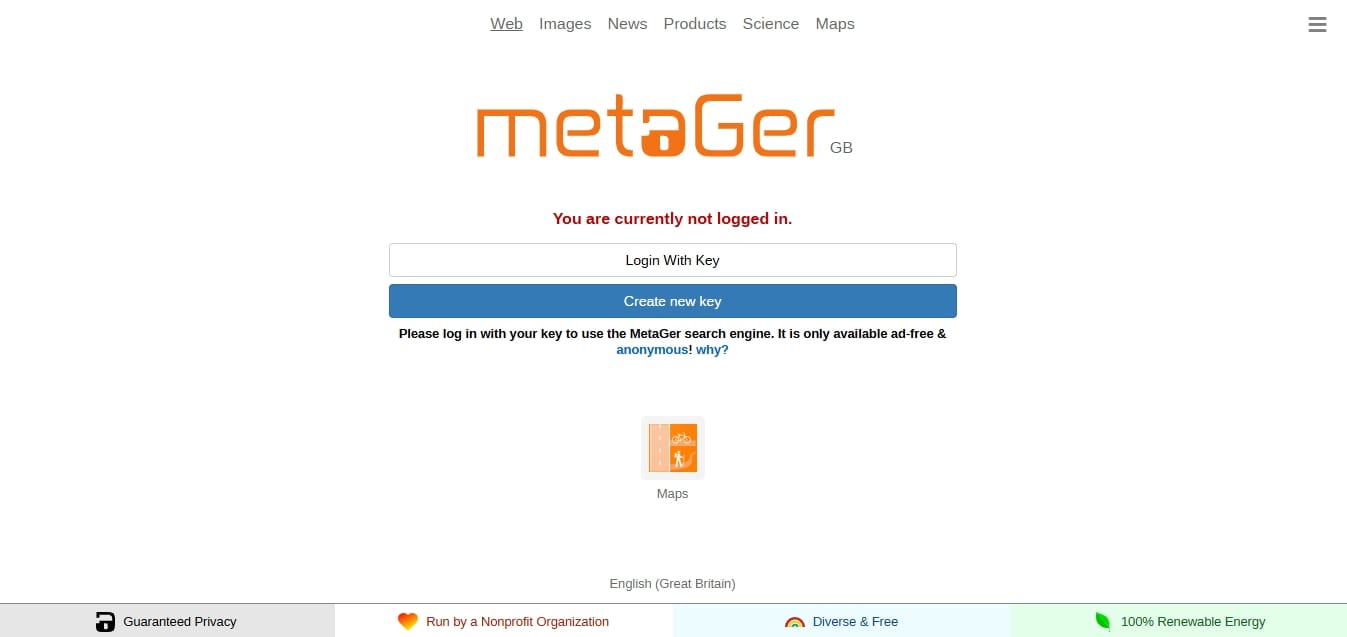
Quick verdict: Best nonprofit-first privacy option.
What you gain: MetaGer operates under a transparent German nonprofit structure. It includes built-in proxy support and Tor routing options by default.
What you give up: It lacks the speed and modern interface polish of its competitors. As a metasearch engine, upstream index dependencies still apply.
Honest caveat: A highly trustworthy organizational structure, but clunky for users accustomed to mainstream search UX.
Which safe search engines protect families?
- "Safe", "private", and "family-friendly" overlap, but serve completely different technical functions.
- Swisscows focuses heavily on family-safe filtering.
- Ecosia focuses on climate impact over maximal privacy.
Safe search engines prioritize filtering explicit, violent, or adult content. Swisscows is the leading dedicated safe search engine because it enforces a strict, un-bypassable family-friendly filter. However, Swisscows recently moved its fully anonymous search guarantees to its paid Swisscows Pro tier.
Swisscows
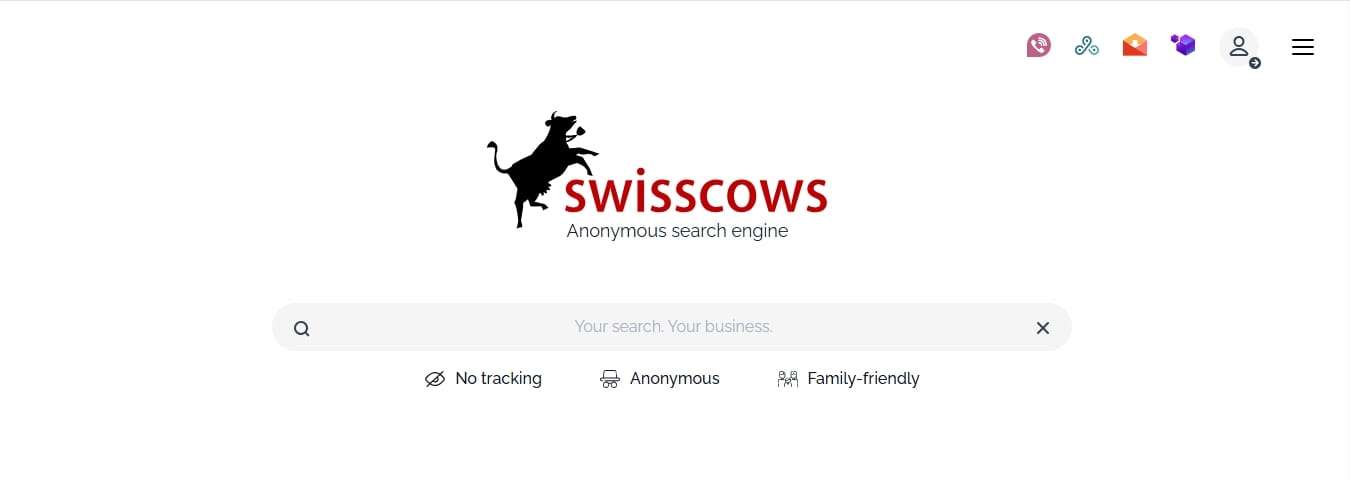
Quick verdict: The best family-safe search option.
What you gain: Swisscows actively bans pornographic and violent content, making it a reliable default for parents and schools. It operates under strict Swiss jurisdiction.
What you give up: Following policy changes in 2026, the free version is no longer the fully anonymous tool older listicles describe. Full zero-surveillance guarantees now require their paid Pro tier due to ad-partner requirements.
Honest caveat: An excellent content-filtering choice, but no longer a free privacy purist pick.
Ecosia
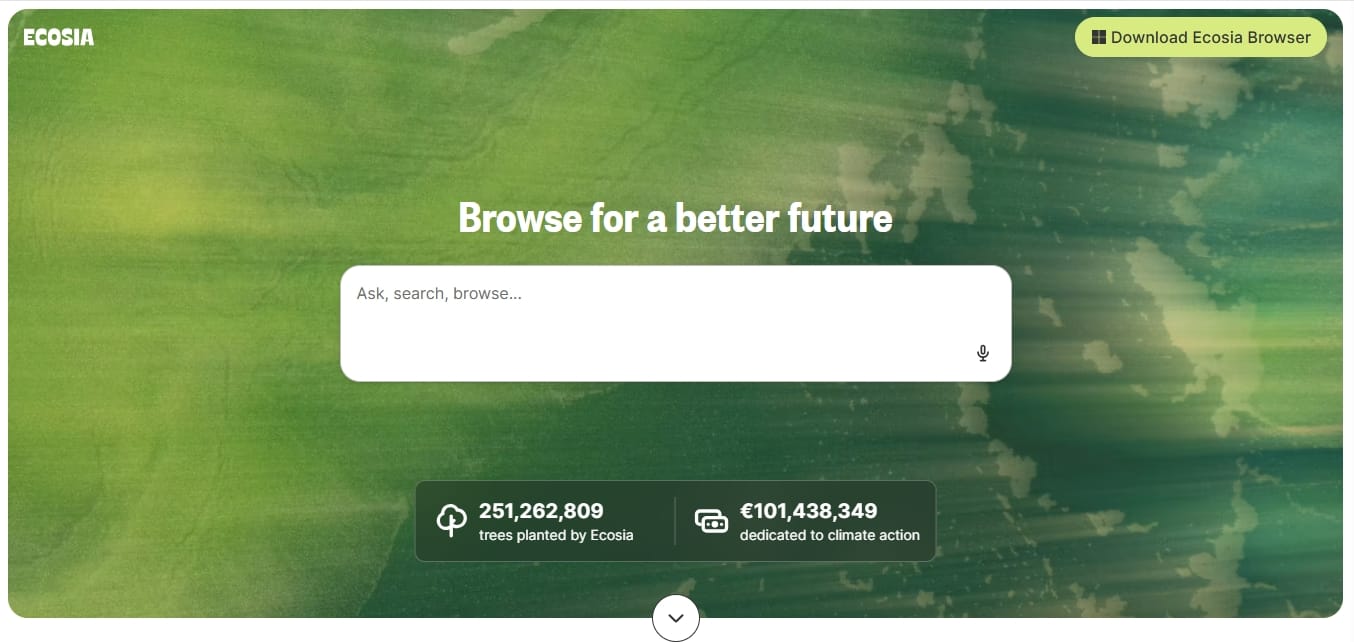
Quick verdict: Best for eco-conscious users, but not a maximal-privacy tool.
What you gain: You support a verifiable tree-planting mission while using a search engine that respects privacy far more than Google.
What you give up: Ecosia depends on Bing for search results and ad syndication. They collect some basic data to maintain the revenue necessary for their climate mission.
Honest caveat: Use Ecosia to support the planet. It is privacy-improved, but not privacy-maximal.
AI search vs private search
- AI integration fundamentally changes the privacy surface area of a search query.
- Prompt routing, logging, and metadata stripping matter just as much as query tracking.
- Disable AI features when searching for sensitive medical, legal, or financial data.
A search engine can be privacy-first and still expand its risk surface when generative AI enters the loop. This shift is massive: 64% of security and privacy professionals now worry about inadvertently sharing sensitive information with generative AI tools.
Are AI search engines private by default?
No. AI search privacy depends entirely on where prompts route, whether personal metadata is stripped, and how long chat logs are retained. Once AI layers into search, "private search" and "private AI use" require separate technical evaluations.
How to evaluate AI inside a private search engine
When using an AI-augmented private search engine, verify four things:
- Is the AI feature strictly optional?
- Are prompts proxied and anonymized before processing?
- Are the language models hosted in-house, or sent to third parties (like OpenAI)?
- Are chats stored, and for what duration?
How Brave, DuckDuckGo, Kagi, and Qwant handle AI
- Brave: Ask Brave runs largely on in-house infrastructure, giving Brave direct control over data handling.
- DuckDuckGo: Duck.ai acts as an anonymizing proxy, stripping personal metadata before routing your prompt to third-party models like Anthropic.
- Kagi: Detailed privacy documentation explicitly outlines their API routing and immediate data-deletion logic.
- Qwant: Features AI summarization, but requires careful auditing of their data-processing terms to understand third-party data flows.
When to disable AI completely
Turn AI answers off for legal, medical, financial, HR, or deeply personal searches. Use AI for broad summarization, but omit it when you require a zero-data footprint.
Which private search engine delivers the best results?
There is no single winner across all query types. Startpage excels at local relevance. Brave provides highly accurate technical results. Kagi heavily suppresses SEO spam on shopping queries. Mojeek struggles with hyper-local intent but delivers incredibly clean, objective results for deep informational research.
What private search does not protect you from
- Private search secures the query, not the destination.
- It does not stop browser fingerprinting.
- It does not block trackers on the websites you click next.
No. A private search engine only protects the search step. It prevents Google or Bing from attaching your queries to an advertising profile. It does not stop tracking on the subsequent sites you visit, hide your broader browsing identity, or block cross-site cookies.
Choosing a safer search provider solves exactly one problem: search profiling.
It does not protect you from:
- Trackers loading on the destination site.
- Browser fingerprinting across the wider web.
- Being logged into major accounts (like Gmail) in another tab.
- Pop-ups, ad pixels, and ad networks.
Build your privacy stack
- Search engines are just layer one.
- Use a privacy-respecting browser.
- Block trackers and ads at the browser layer.
What else do I need besides a private search engine?
A practical privacy stack requires five layers: a private search engine, a privacy-respecting browser, a browser-level ad blocker, a VPN (based on your threat model), and strict account hygiene. Search engines reduce profiling; the rest of the stack stops tracking after the click.
Layer 1: Private search engine
Select your default engine from the comparison table above.
Layer 2: Privacy-respecting browser
Use a browser engineered for privacy (like Brave, Firefox, or LibreWolf) rather than relying on standard Chrome or Edge installations.
Layer 3: Ad and tracker blocking
Once you click a search result, ad scripts, trackers, and redirects immediately load across the destination site. A private search engine cannot stop this.
If you use Chrome or Edge, add a browser-level blocker immediately. Blockify reduces intrusive ads, tracking scripts, ad cookies, and redirects locally in your browser. Over 400,000 users leverage it to ensure a cleaner, faster browsing experience after leaving the search results page.
Layer 4: VPN
A Virtual Private Network (VPN) encrypts your traffic and hides your IP address from your ISP. It serves an entirely different function than a search engine.
Layer 5: Account hygiene
Log out of major tech accounts when not actively using them. Separate your work and personal browsing profiles, and never paste sensitive data into generative AI tools.
Switch your default search engine in 30 seconds
- Changing your default takes less than a minute.
- You do not need to install new software to switch.
- You can always revert if you dislike the results.
How do I set a private search engine as my default?
Open your browser's settings, navigate to the search section, and select your preferred engine from the dropdown list. The process takes seconds on Chrome, Edge, Firefox, and Safari, and does not require uninstalling your current setup.
Pick one engine now.
Chrome: Click the three dots (top right) > Settings > Search engine > Select your new engine. (Note: This is the ideal time to add Blockify for Chrome to secure your downstream browsing).
Edge: Click the three dots > Settings > Search "Address bar and search" > Change the default search engine.
Firefox: Click the three lines (top right) > Settings > Search > Select your preferred default.
Safari: Open Safari > Settings > Search tab > Choose your new engine.
FAQ
Is Incognito mode the same as using a private search engine?
No. Incognito mode only limits what your browser stores locally on your physical device. A private search engine dictates how your queries are handled by the search provider on their servers. One clears local history; the other prevents centralized search profiling.
Can my ISP still see my searches if I use a private search engine?
A private search engine limits what the search provider knows, but does not erase network visibility. HTTPS encryption hides the specific query contents, but your ISP still sees that you connected to that search engine's domain.
What is an unrestricted search engine, and is it private?
An unrestricted search engine focuses on removing content filters and censorship limits. A private search engine focuses on stopping user tracking and data logging. A search provider can serve unfiltered results while still tracking your identity aggressively. Treat filtering and privacy as entirely separate features.
What are the best free private search engines?
Brave Search and DuckDuckGo are the two best free private search engines. Brave provides structural independence by utilizing its own web index. DuckDuckGo provides a low-friction interface that mimics mainstream search perfectly. Startpage is the best free option if you explicitly want anonymized Google results.
Can I use a private search engine on my phone?
Yes. You can access these engines via any mobile browser, or use dedicated mobile apps provided by Brave and DuckDuckGo. You can easily change the default search engine in your mobile Safari or Chrome settings following the same steps as desktop.
Brave vs DuckDuckGo: Which is more private?
If privacy means independence from Google and Bing infrastructure, Brave is superior due to its independent index. If privacy means easy, low-friction tracking protection for everyday use, DuckDuckGo is highly effective. Both represent a massive upgrade over traditional surveillance-heavy search engines.
Secure your data with the best private search engines today
Do not fall into decision paralysis. Pick the use case that matches your daily habits.
If you want the easiest transition from Google, choose DuckDuckGo or Startpage. If you demand structural independence, choose Brave Search. If you require a premium, ad-free experience, pay for Kagi.
Select one of the best private search engines today, switch your default settings, and clean up the rest of your browsing. Once you click a search link, the protection of a private search provider ends. Add a browser-level blocker like Blockify to stop trackers, pop-ups, and ad networks from profiling you across the wider web.