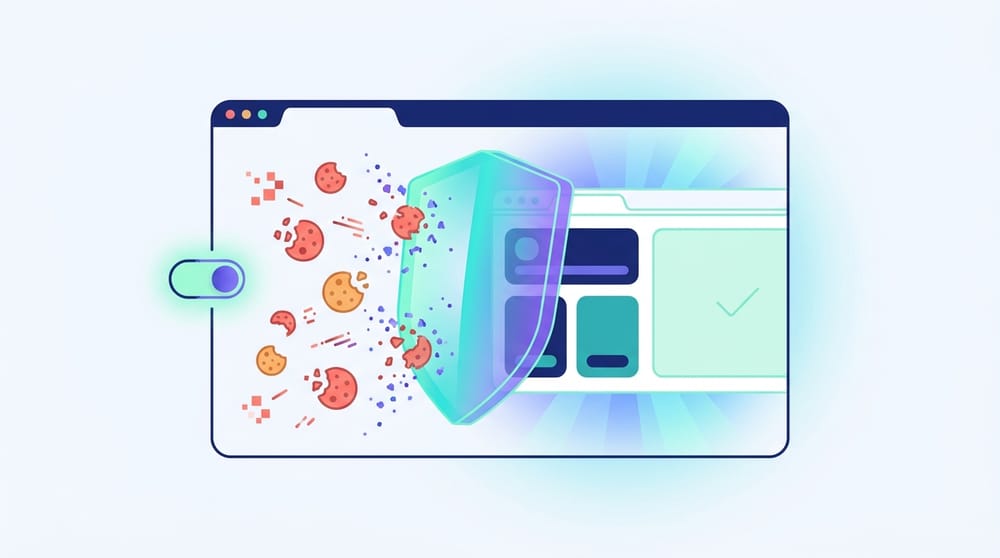
Want to stop advertisers from tracking you across the web? You need to know how to disable cookies in browser settings.
To secure your privacy without breaking the websites you use daily, the best approach is to block third-party cookies.
- Chrome: Go to Settings > Privacy and security > Third-party cookies and select Block third-party cookies.
- Edge: Go to Settings > Cookies and site permissions and toggle on Block third-party cookies.
- Safari & Firefox: Both browsers block third-party trackers by default, requiring no manual changes for baseline protection.
I will show you exactly how to adjust these configurations across every major platform, plus how to fix a website if your privacy settings break it.
First-Party vs. Third-Party Cookies
Always block third-party cookies, not all cookies. Blocking everything will make the modern web virtually unusable.
- First-party cookies come directly from the website you visit. They save your logins, cart items, and site preferences. Blocking them breaks basic website functionality.
- Third-party cookies come from external companies embedded on the page (like ad networks and social widgets). They track your activity across multiple websites. Blocking them stops cross-site tracking without interrupting your normal browsing experience.
Disabling vs. Clearing Cookies
Clearing cookies deletes saved data. Disabling cookies prevents new data from being saved. If you want a completely clean slate, you must do both.
How to disable cookies in chrome browser
Chrome does not block third-party cookies by default. You must enable this protection manually in your privacy settings.
Chrome on Desktop:
- Open Chrome and click the three-dot menu → Settings.
- Click Privacy and security → Third-party cookies.
- Select Block third-party cookies.
Chrome on Android:
- Open Chrome, tap the three-dot menu → Settings.
- Tap Site settings → Third-party cookies.
- Select Block third-party cookies.
Fixing Broken Sites in Chrome:
If a website fails to load properly, do not revert your global privacy settings. Instead, scroll down the Third-party cookies page to the Allowed to use third-party cookies section and add the specific URL as an exception.
How to disable cookies in safari browser
Safari automatically blocks third-party trackers. You only need to verify your settings, not start from scratch.
Safari on Mac:
- Open Safari and click Safari in the top menu bar → Settings → Privacy.
- Verify that Prevent cross-site tracking is checked.
- Optional: Check Block all cookies only if you need strict, burner-level privacy. Be aware this will break most account logins.
How to disable cookies in browser iPhone
On iOS, cookie management happens in your device's Settings app, not inside the browser interface itself.
If you are wondering how to disable cookies in browser iPhone settings, Safari is your primary control hub. Chrome on iOS does not offer the same third-party cookie toggles found on desktop or Android.
Exact iOS Steps:
- Open the iPhone Settings app.
- Scroll down and tap Apps → Safari.
- Ensure Prevent Cross-Site Tracking is turned on.
- Optional: Tap Advanced and toggle on Block All Cookies if you accept heavy site breakage in exchange for absolute privacy.
How to disable cookies in Firefox
Firefox Standard mode isolates tracking cookies out of the box. Most users can leave this setting exactly as it is.
Firefox utilizes "Total Cookie Protection" by default. It creates a separate "cookie jar" for every website, meaning external trackers cannot share your data across different domains.
Verify or Tighten Firefox Settings:
- Open the Firefox menu → Settings → Privacy & Security.
- Under Enhanced Tracking Protection, ensure Standard is selected.
- Switch to Strict if you want aggressive tracker blocking.
If a specific site breaks while on Strict mode, click the shield icon next to the address bar and toggle off protection specifically for that domain.
How to disable cookies in Edge
Edge requires manual intervention to block third-party cookies completely.
Edge relies on "Tracking Prevention" to block known malicious trackers, but it does not aggressively block all third-party cookies by default.
Block Third-Party Cookies in Edge:
- Click the three-dot menu → Settings.
- Navigate to Cookies and site permissions → Manage and delete cookies and site data.
- Toggle on Block third-party cookies.
Adjust Tracking Prevention:
For a faster web experience without strict cookie blocks, go to Settings > Privacy, search, and services. Change your Tracking prevention level from Balanced to Strict.
What Breaks When You Block Cookies?
Blocking third-party cookies causes minimal issues. Blocking all cookies disrupts the core functionality of the web.
Websites rely on cross-site data for embedded widgets, payment processors, and federated identity tools (like "Sign in with Google").
Symptom vs. Quick Fix:
- Cannot stay logged in: You blocked all cookies. Stop blocking first-party cookies.
- "Continue with Google/Apple" fails: Third-party login scripts are blocked. Add a site exception for that specific domain.
- Site says "Cookies Required": You are over-blocking. Add the domain to your browser's allowed exception list.
Beyond Cookies: True Browser Privacy
Disabling cookies is only step one. Advertisers still use browser fingerprinting to identify you.
Does disabling cookies stop all tracking? No. Websites use alternative methods like browser fingerprinting (tracking your device's unique hardware and software setup to build a profile). A 2021 FP-Inspector study found fingerprinting on 10.18% of the top 100,000 websites and over a quarter of the top 10,000. A separate 2025 real-user study found automated crawls missed 45% of the fingerprinting websites users actually encountered.
To strengthen your defenses:
- Use Global Privacy Control (GPC): This browser-level signal legally tells compliant sites not to sell or share your data.
- Install an On-Device Filter: If you use Chrome or Edge, block third-party cookies and add Blockify. Blockify intercepts advertising scripts, media ad calls, and tracking pixels locally before they render.
Add Blockify for Chrome or Blockify for Edge to stack your privacy defenses, speed up page loads, and eliminate pop-up clutter.
FAQ
Is it safe to disable cookies?
Yes. Blocking third-party cookies is perfectly safe and highly recommended. However, blocking all cookies will prevent you from logging into your bank, shopping online, or saving basic site preferences.
Will disabling cookies log me out?
Disabling new cookies will not instantly log you out of current active sessions. However, if you learn how to delete cookies and wipe your existing data, you will be signed out of all websites immediately.
Can I clear cache and cookies at the same time?
Yes. Every major browser allows you to clear cache and cookies simultaneously in their respective privacy menus. Doing this improves privacy and frees up hard drive space, though your next page loads will be slightly slower as site images re-download.
Does Incognito mode block cookies?
Incognito mode blocks third-party cookies by default and deletes all session cookies the moment you close the window. For more on what private mode can and cannot do, see our guide on browse anonymously for privacy. Keep in mind, it does not hide your browsing activity from your internet service provider or your employer.